A lesson should leave you clearer about what to play, how to practise it and what to listen for. I plan around your experience and musical interests, with time to tackle the things that have been difficult at home.
What we can work on together
We choose activities that support your playing. A lesson might include:
- Technique and posture: looking at how you sit and move at the keyboard, and using focused exercises to support a passage you are learning.
- Reading: connecting written notes and rhythms with the keyboard, then trying short sections of unfamiliar music.
- Repertoire: working on a piece you enjoy, from finding the notes to shaping phrases and balancing melody with accompaniment.
- Improvisation: trying your own musical ideas using a rhythm, scale or chord pattern we have explored.
These are options, not a fixed checklist for every lesson. If you need more time on a difficult rhythm or want to understand a chord, we can focus there.
Starting as a beginner
You do not need to read music or have learnt another instrument. Early work can include finding notes, keeping a steady beat and playing short phrases. We build reading and coordination alongside practical playing, rather than expecting you to master them before you begin.
If using both hands feels confusing, we can separate the parts and work out where they fit together. Progress can be as simple as playing a few bars with more confidence and understanding why they now feel easier.
Returning to the piano
Tell me what you played before, how long you have been away and what you would like to do now. Old books or a familiar piece can give us a useful starting point. We can revisit reading and technique where needed without assuming that you have forgotten everything.
Lessons for children aged six and above
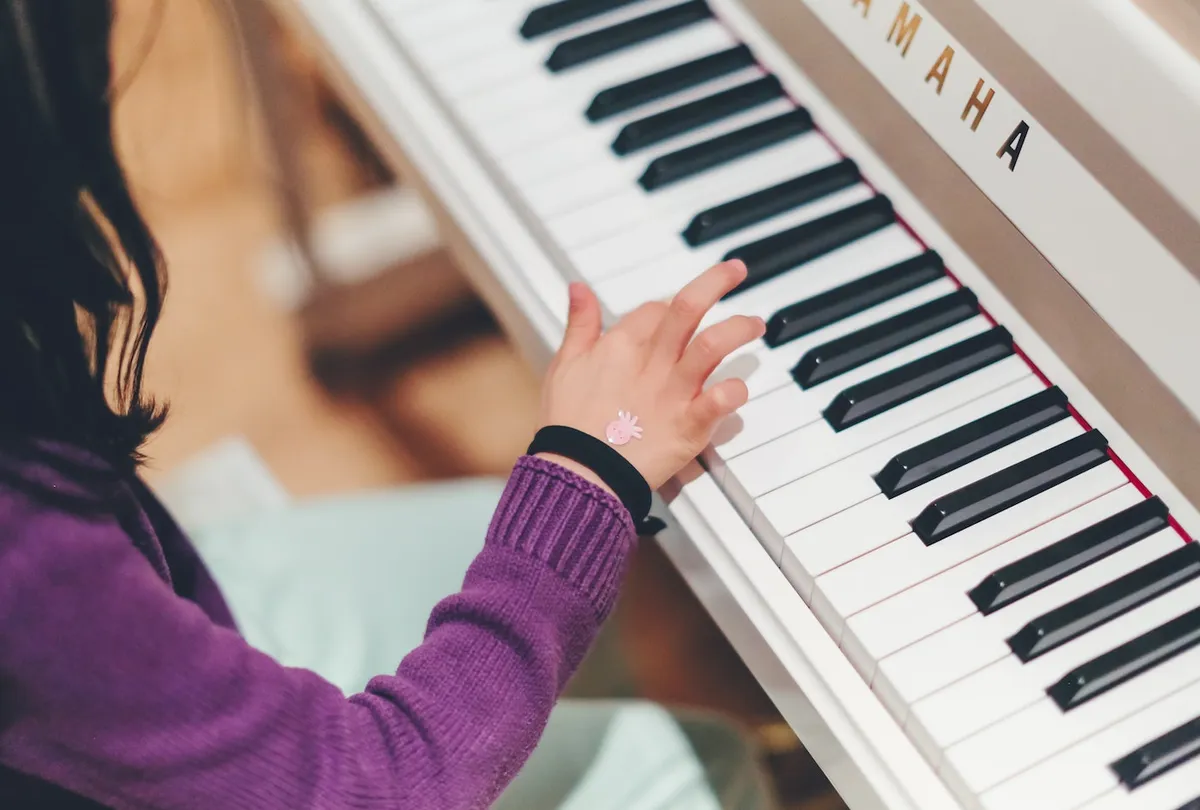
Children’s lessons are planned around their experience and interests. When enquiring, share your child’s age and any previous musical activities. We can discuss lesson length, what they enjoy and how a parent or carer can help make space for practice at home.
A short, achievable task can be easier to return to than a vague instruction to “practise more”. Ask what your child is working on and how you can support it, even if you do not play yourself.
Music theory and aural skills in piano lessons
Music theory becomes easier to relate to when you can hear and play the idea. A scale can show you which notes belong to a key; a chord can help explain the harmony underneath a melody. We can connect these patterns with your current piece, rather than learning terminology without a musical example.
For reading, try noticing the direction and distance between notes as well as naming them. For rhythm, count or clap a short pattern before playing it. These activities link the written score with movement and sound, helping you make sense of what you are practising.
Listening work, sometimes called aural training, can include copying a rhythm, hearing whether a phrase rises or falls, or comparing two ways of playing the same melody. Improvising with a few notes gives you another way to test what you hear. Together, practical work and music theory develop musical understanding and musicianship.
If you want dedicated music theory lessons or support with a specific exam syllabus, tell me your aims before booking so we can discuss whether I can help. You can also learn for enjoyment without working towards grade exams.
Making progress between lessons
I give pupils practice guidance so they know what to focus on. Tell me how much time you realistically have and what instrument you use at home. This helps us choose work you can return to between lessons.
For example, instead of repeatedly playing a whole piece from the beginning, choose a short passage and identify the difficulty. Try the rhythm away from the keys, practise each hand separately, or reduce the speed before putting the passage back into context. Bring questions to your next lesson if it still feels uncertain.
Classical piano, jazz and popular music
Classical, jazz and pop can all provide material for learning. Bring a few pieces or artists you enjoy. We can consider a suitable arrangement, choose something at your current level or identify the skills needed for a longer-term goal.
Learning a piece is more than reaching the last note. We can explore phrasing, dynamics and how to make a melody stand out, so that the music begins to sound the way you intend.
Preparing for your first lesson
Send a brief outline of your experience, your musical interests and the days you can usually attend. Mention whether you have a piano or keyboard for practice; if you already own books, ask which to bring. There is no need to buy new materials before we have discussed them.
Lessons take place mainly on Vincent Road in Sheffield’s Antiques Quarter. The full teaching address is shared when you book. Please ask about directions and any access requirements before your visit.
Read piano lesson prices and cancellation arrangements or find practical answers before booking.
To discuss a first lesson, email info@pianolessonssheffield.com.